Category: Breast Cancer Awareness

FDA: Thermography is no substitute for Mammography!
January 2, 2021

FDA: “There is no valid scientific data to show that thermographic devices, when used on their own or with another diagnostic test, are an effective screening tool for any medical condition, including the early detection of breast cancer or other diseases and conditions”.

The FDA is aware that health spas, homeopathic clinics, mobile health units, and other health care facilities are using thermography inappropriately as a standalone tool for breast cancer screening or diagnosis.

The FDA has received reports that these types of facilities provide false information that can mislead patients into believing that thermography is an alternative or better option than mammography. The FDA is concerned that people will believe the misleading claims about thermography. Read below to find out more about this topic.
Breast Cancer Screening: Thermography vs. Mammogram

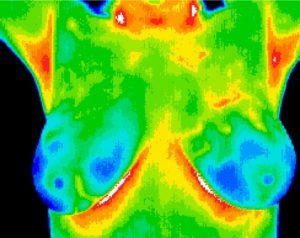
Since 1990s, several methods have been used for the early detection of breast cancer, such as mammography and MRI. Mammography is the standard method for early detection of breast cancer, but it has one main limitation: that is, it may produce a large number of false positives. In contrast, respective standard screening techniques are used for early detection of breast cancer such as Thermography. Thermal infrared images are used to detect lesions in breasts. Since the normal temperature range of human body is between 36.5∘C to 37.5∘C, by using this technique, thermal infrared cameras are able to capture the variation of temperature between normal and abnormal breast tissues. These Thermograms detect the temperature of the different regions of the breast. Regions with warmer temperature are more likely to contain tumors than a normal tissue. This technique has several substantial benefits:

  • It is less expensive than the mammography and magnetic resonance imaging (MRI)
  • It is non-contact, non-invasive
  • It is non-radiative
  • It is a safe diagnostic procedure, in which patients feel no pain
  • This method can be used from far way
  • It is possible to simultaneously monitor a large area of the population
  • Interpretation of thermogram’s colors is easy and fast.
  • This method only records natural radiation from the surface of the skin and there is no trace of harmful rays, so is suitable for long-term and repeating use.
  • It is a fast way to monitor and observe the dynamic changes in temperature.
  • Early detection up to 10 years before the cancer turns into a full-blown size

The tool, however, has been cleared by the FDA only as a supplement to primary diagnostic tests such as mammography and not as an substitute. Helen J. Barr, M.D., director of the Division of Mammography Quality Standards in the FDA’s Center for Devices and Radiological Health states that: “You should not rely solely on thermography for the screening or diagnosis of breast cancer.”  

The agency affirmed that individuals who substitute thermography for mammography may miss the opportunity to detect cancer at its earliest and most treatable stages. The agency wrote in its safety communications statement that: “We are committed to protecting and promoting access to safe and effective breast screening devices.” 

The United States Food and Drug Administration currently accept applications for thermographic cameras as Class I Medical Devices. These are described as devices that hold no potential risk and have the lowest level of regulatory control. Consequently, Experts highly recommend that the technique should only be used in connection with other breast cancer screening processes such as mammography. Moreover, it provides suggestions for individuals getting breast cancer screening to be aware of thermography as well as recommendations for health care providers to educate patients about the limitations of thermography.

Recommendations for People Getting Breast Cancer Screening  

  • Be aware that thermography is not a substitute for regular mammograms and should not be used in place of mammography for breast cancer screening or diagnosis.
  • Have regular mammograms according to screening guidelines or as recommended by your health care provider.
  • Follow your health care provider’s recommendations for additional steps to diagnose breast cancer such as a clinical breast exam, other breast imaging (for example, breast ultrasound or MRI), or breast tissue biopsy.

Recommendations for Health Care Providers

  • Educate patients about the limitations of thermography. For example, the high false negative and false positive rates of thermography can provide misleading information that could result in a delayed diagnosis or unnecessary medical follow up.
  • Discourage the use of thermography to diagnose or screen for breast cancer.
  • Talk to patients or caregivers about safe and effective ways to screen for breast cancer including the benefits and risks of available testing options.

Reporting Problems to the FDA

If you experience an injury or adverse event with thermography, the FDA encourages you to file a voluntary report by phone at 1-800-FDA-1088 or online at MedWatch, the FDA Safety Information and Adverse Event Reporting program. Please include the following information in your reports:

  • Device Name (Brand Name)
  • Manufacturer’s Name
  • Details of Adverse Event and Medical and/or Surgical Interventions (if applicable)

Prompt reporting of adverse events can help the FDA identify and better understand the risks related to the use of medical devices.

Additional Resources

Contact Information

If you have questions about thermography, please contact www.aitalos.com or visit our linkedIn page: https://www.linkedin.com/company/ai-talos
How fast does breast cancer grow?
December 26, 2020

Today, one of the most common diseases that play a leading role in the death of women is breast cancer. To estimate how breast cancer can develop within a year or so is very difficult. There are different types of breast cancer that can grow at a variety of rates and several factors can have a potential impact on its growth and chance of developing.

In this article, we take a look at how quickly breast cancer might develop, types, symptoms and different ways of treating patients using AI methods.

How fast does breast cancer grow?

Since breast cancer can affect each person differently, it is not an easy task to calculate exactly how fast it can develop. Breast cancer progression and its chance of spreading depends on several factors:

  1. Types of breast cancer

Breast cancer can be invasive and non-invasive. Non-invasive breast cancer will not spread beyond the connective tissues. On the contrary, invasive breast cancer will spread to the surrounding connective tissues and other areas of the body.

  1. Grades of breast cancer (1-3)

Doctors will grade breast cancer from 1 to 3. Grade 1 is a slower-growing cancer and grade 3 is a faster-growing cancer. A higher grade means this type of cancer is more likely to grow faster and spread to other parts of the body.

  1. Stages of breast cancer (0-4)

Doctors put breast cancer progression in the category of 0-4 stages. This categorization is a substantial factor for making decisions when you are treating the patients.  

Stage 0. Non-invasive. only present in the ducts or the lobules.

Stage 1. Invasive,small and near the primary site.

Stage 2. Invasive, tumors may be larger than in stage 1, and the cancer may have spread to the lymph nodes.

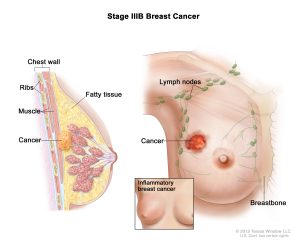
Stage 3. Invasive, tumors may be larger, and cancer has spread to the lymph nodes, possibly to several. Breast cancer at this stage has not spread to other organs.

Stage 4. Breast cancer has developed in other areas of the body outside the breast and lymph nodes, often in the bones, lungs, brain, or liver.

Created for the National Cancer Institute, http://www.cancer.gov

Stage 4 cancer that has already spread to other areas of the body is more likely to spread faster.

Personal factors

American Cancer Society estimates about the 5-year survival rates for people at different stages of breast cancer. Breast cancer growth within a year will often depend on personal factors, including:

  • age at diagnosis
  • hormone status
  • family history of breast cancer
  • exposure to alcohol, cigarettes, or pollution
  • previous history of cancer

Signs and symptoms of breast cancer

According to Centers for Disease Control and Prevention (CDC), some people with breast cancer experience no symptoms at all. But people with breast cancer may experience a range of symptoms, but not all people will experience the same symptoms. Some signs and symptoms of breast cancer include:

  • a lump or mass in the breast tissue
  • pain, swelling, or redness on any part of the breast
  • dimpling of the skin covering the breast
  • unusual nipple discharge
  • flaking skin on or near the nipple
  • change in the shape or size of the breast

Detection

Several standard screening techniques are used for early detection of breast cancer such as Mammography, Thermography, Biopsy and self-examination.

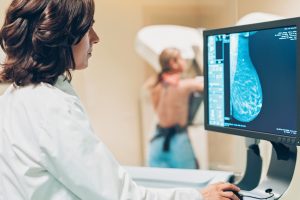
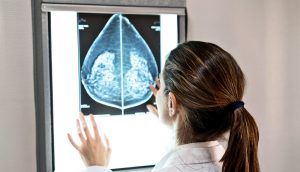
Mammography: a breast cancer screening technique consisting of low-dose x-rays of the compressed breast. Clinical organizations recommend having mammograms every year beginning at age 40.

Thermography: Thermal infrared images are used to detect lesions in breasts. These Thermograms detect the temperature of the different regions of the breast. Regions with warmer temperature are more likely to contain tumors than a normal tissue.

Biopsy: This is a procedure that involves removing a sample of tissue from the breast for further examination.

Self-examination: Before women can experience any signs of cancer such as lumps or tumors, they can diagnose it with self-examination. This method can also help women to find breast diseases such as a lump, pain or nipple discharge.

Treatment

Breast cancer treatment plans depend on the type and stage of the cancer, as well as a person’s overall health status and their personal preferences. Treatments for breast cancer are either local or systemic.

Local treatment: remove cancer in a particular area of the body

Systematic treatment: destroy cancer throughout the body.

The AI Talos breast screening app provides women with access to an online breast cancer screening tech for early detection. Please visit www.aitalos.com for more information. Early detection can save your life.

Thermography: Information and Overview
December 11, 2020

Breast cancer can happen in both men and women. But it is the most prevalent type of cancers that is diagnosed among women. It can be detected as a lump in breast tissue that is different from the rest. Other signs may include: tissue thickening/ one breast becoming larger or smaller/ nipple changing position / pain in part of breast or armpit and etc.

Biopsy of the affected area of breasts is used to diagnose most types of breast cancers. Moreover, there are other types of breast cancer that need to be examined with specialized laboratory methods. Since 1990s, several methods have been used for the early detection of breast cancer, such as mammography and MRI. Mammography is the standard method for early detection of breast cancer, but it has one main limitation: that is, it may produce a large number of false positives. Here we will take a look at what Mammography is:

“ Mammography is breast cancer screening using low-dose x-rays. Medical organizations suggest having mammograms every year beginning at age 40. Before women can experience any signs of cancer, mammography can diagnose it. This method can also help women to find breast diseases such as a lump, pain or nipple discharge.”

In contrast, respective standard screening techniques are used for early detection of breast cancer such as Thermography. Thermal infrared images are used to detect lesions in breasts. These Thermograms detect the temperature of the different regions of the breast. Regions with warmer temperature are more likely to contain tumors than a normal tissue. This technique has several substantial benefits:

  • It is less expensive than the mammography and magnetic resonance imaging (MRI)
  • It is non-contact, non-invasive
  • It is non-radiative
  • It is a safe diagnostic procedure, in which patients feel no pain
  • This method can be used from far way
  • It is possible to simultaneously monitor a large area of the population
  • Interpretation of thermogram’s colors is easy and fast.
  • This method only records natural radiation from the surface of the skin and there is no trace of harmful rays, so is suitable for long-term and repeating use.
  • It is a fast way to monitor and observe the dynamic changes in temperature.
  • Early detection up to 10 years before the cancer turns into a full-blown size


Since the normal temperature range of human body is between 36.5∘C to 37.5∘C, by using this technique, thermal infrared cameras are able to capture the variation of temperature between normal and abnormal breast tissues.

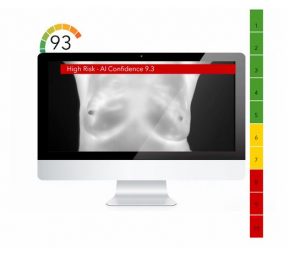
AI application for breast cancer Thermography

According to several studies, by using highly well-aimed and accurate soft-wares, breast cancer can be detected and treated at early stages of the disease. Several applications have been found in the medical profession for thermal imaging. In recent years, due to advancements in image processing techniques, Thermography has been able to achieve more than other methods such as Mammography. Thermography soft-wares (CAD) serves the need of physicians for an Al-guided support for breast cancer Thermography, which is an decisive factor in validating what they speculate, detecting what they potentially did not observe throughout the process and taking notice of highly dubious studies and researches that need to be brought to more attention.

This website uses cookies to improve your experience. Cookie Policy